
Straightforward clear, $150–$300
A blockage in the pan or its bend, cleared in one visit during business hours. Most single-toilet blockages sit here.
A toilet that will not flush is not a wait-and-see problem, especially in a one-bathroom home. We clear it same-day, find out why it happened, and fix running, leaking and constantly-blocking toilets properly across Waitara.
Kind one is an event: something went down that should not have, wipes that lied on the packet, cotton pads, a small toy on a big adventure. The right tool clears it in one visit and the story ends. What turns kind one into a disaster is escalation: hammering the plunger at something compacted, or pouring caustic chemicals that sit in the S-bend waiting to splash the next person who tries.
Kind two is a pattern, the toilet that goes down every few weeks. That toilet is innocent. The sewer under it is not: tree roots through old clay joints, a bellied run holding waste, scale closing the bore, all endemic under Waitara’s older streets. Patterns get the CCTV camera, because paying once to fix a drain beats paying monthly to clear a toilet, and the footage means you never take our word for anything.
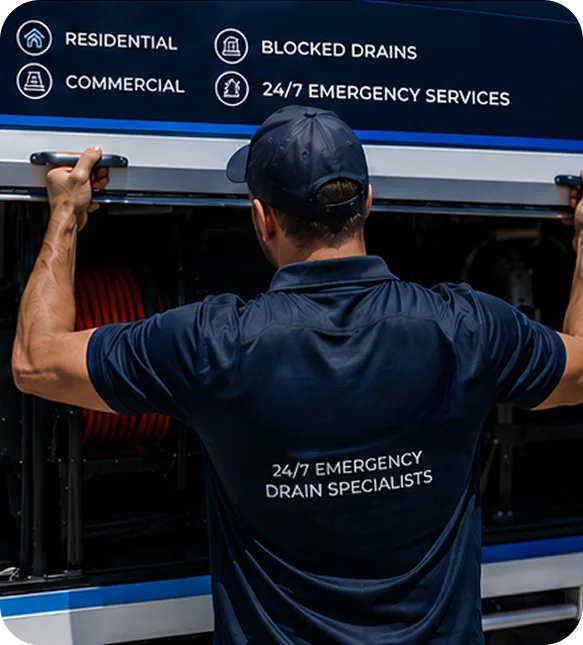

Waitara’s older walk-ups share common sewer lines laid decades ago; one flushed wipe or grease build-up can block the stack for every unit at once.
For a business, the cost of a blocked toilet is rarely the plumbing bill, it is the hours you cannot trade. So the useful question on arrival is which fixtures we can keep usable while the work happens, not just how fast the whole job finishes.
Where the work genuinely cannot happen around trade, we will say so and book it outside your hours rather than half-fixing it during them.
Waitara sits beside Hornsby on Sydney’s Upper North Shore (postcode 2077), a compact suburb where decades of red-brick unit blocks and newer apartments mix with leafy family streets, bordered by Hornsby, Wahroonga and Normanhurst. Shared sewers and heavy tree canopy shape its drain problems.
Strata committees respond to documentation, not to descriptions. A resident reporting a recurring smell or a slow drain gets minuted; a camera report naming the line, the defect and the likely cost gets a quote requested.
So when we attend an apartment we write it up that way, which line, which lot, what the camera showed, and what happens if it is left. You can hand that straight to the strata manager without having to argue the case yourself.
If your toilet blocks roughly the same number of months apart each time, that is not bad luck and it is not what is being flushed. It is a fixed defect in the line filling at a predictable rate.
The suburb’s established brush box and eucalypt canopy sends roots into the joints of original clay drains under its older houses and unit gardens.
Write down the dates. Two or three of them tell us more than a description of the symptoms, because the interval indicates how fast the obstruction rebuilds, which narrows down what it is before the camera goes in.
The tree is rarely the villain, and removing it is rarely the answer, a mature tree is worth more to the property than the drain repair costs, and the roots already in the line do not vanish when the trunk goes.
What helps: knowing where your line runs so future planting goes elsewhere, and sealing the joints that are already open. If the tree is on council land or a neighbour's property, the repair is still yours, but the camera footage is what any conversation with them needs to start from.
In premises with a kitchen, the toilet is often the thing that reports a problem that started somewhere else. Grease narrows the shared line downstream, and the fixture that backs up first is whichever one sits lowest, frequently the customer toilet.
So a blocked toilet in a food business is worth investigating past the pan. Clearing it without checking the trade waste line usually buys a few weeks.
Wipes marketed as flushable pass the test of going around the bend and fail the one that matters, they do not disintegrate. In a sewer they knit together with grease into a mass that holds its shape indefinitely.
Sydney Water pulls tonnes of them out of the network every year, and we pull them out of house drains most weeks. Nothing goes down a toilet except the three things that are supposed to.
A drain that gurgles is drawing air through the water in a trap, which happens when the line beyond it is partly blocked and the flow is pulling a vacuum behind it.
Wherever you hear it, the blockage is downstream of it. So a gurgling shower while the toilet flushes is telling you the problem is in the main line, not the shower, which is useful, because it saves anybody working on the wrong fixture.
A blockage in the pan or its bend, cleared in one visit during business hours. Most single-toilet blockages sit here.
A compacted or deeper blockage needing an electric eel or jetter time rather than hand tools.
The same jobs at night, on weekends or public holidays, once after-hours call-out and labour rates apply.
For repeat offenders: CCTV down the line to find the real cause. You see the footage, and any quote is built on it.
Running and leaking toilets are usually valves, washers and outlet seals, small parts, fixed same visit. A full new suite installed is quoted before anything is touched.
Business-hours versus after-hours is the single biggest cost lever, if it can safely wait for daylight, we will say so on the phone. Figures here are indicative of the 2026 Sydney market rather than a quote from us, you get your own number as a fixed price before any work starts.

Just this toilet, or other drains too? Overflowing or slow? The answers set the urgency and the toolkit, and you get the price picture before we roll.
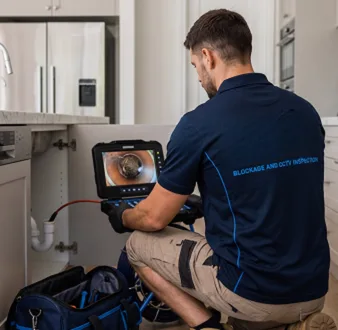
Floor covered before anything starts. Closet auger for the pan; eel or jetter when the blockage lives deeper in the line.
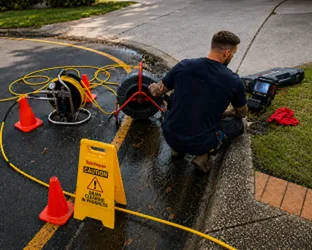
Obvious one-off causes end the job there. A repeat pattern sends the camera down, because recurring blockages are never really about the toilet.

Whatever the lens found, roots, a belly, failing clay, gets a fixed-price fix: jetting, relining or repair. The monthly-blockage cycle ends.
That is not a booking, that is an emergency, and the line treats it like one, 24/7.
Same-day clearing, the cause found, and a fixed price before work starts.

Leave your details and our local Waitara team will call you back fast.